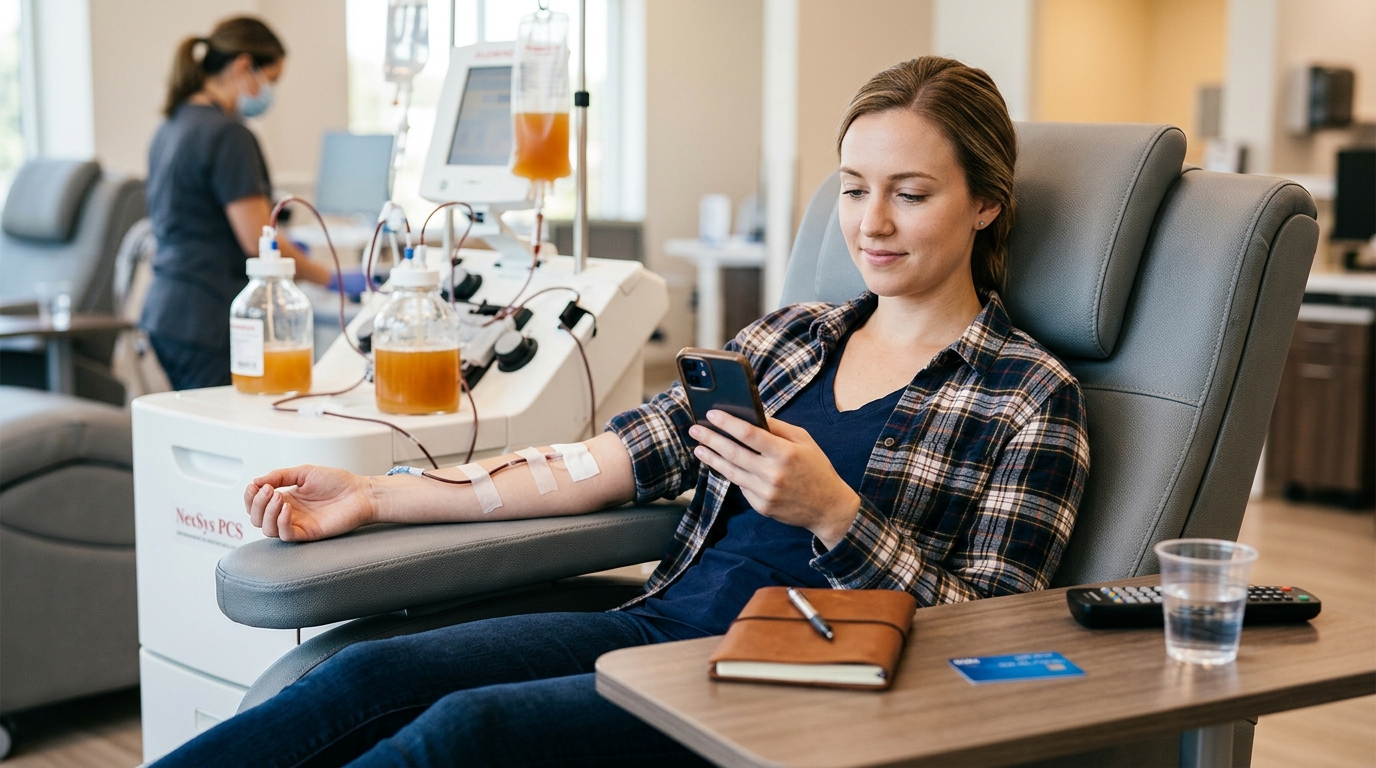
Plasma donation is frequently marketed as free money, but it is effectively biological gig work. You trade physical time, a large-gauge needle puncture, and vital body proteins for immediate cash compensation loaded onto a reloadable debit card before walking out the clinic door.
In 2026, realistic donor compensation ranges from $500 to $1,000 in your first 30 days via aggressive promotional new-donor bonuses, stabilizing to $400 to $680 per month as a consistent returning donor. The commercial blood plasma sector in the United States represents a multibillion-dollar pharmaceutical industry: human plasma cannot be synthesized artificially in a laboratory, creating perpetual corporate demand for treatments addressing hemophilia, primary immunodeficiencies, and severe burn traumas.
However, extracting consistent cash flow from commercial donation centers requires an objective understanding of regulatory volume caps, weight-based pay formulas, nutritional protocols, and tax filing rules. Below is the comprehensive field audit of the major commercial networks, the physiological mechanics of plasmapheresis, and how to avoid costly card processing fees.
Ground Rules & FDA Statutory Guardrails
- FDA frequency limit: Under Title 21 of the Code of Federal Regulations (21 CFR 640.65), individuals may donate source plasma a maximum of two times in any rolling 7-day period, with a mandatory minimum of 48 hours of rest between sessions.
- Body weight dictates collection volume: Federal safety standards link collection volume directly to donor weight brackets (690 mL, 825 mL, or 880 mL). Donors in heavier weight tiers donate larger fluid volumes and receive higher baseline compensation.
- Mandatory IRS taxable income reporting: Plasma compensation is legally classified by the Internal Revenue Service as taxable income. Regardless of whether funds are distributed onto private debit cards, earnings must be reported on federal and state tax returns.
| Commercial Network | Introductory Bonus Window | Per-Donation Avg | Payment Mechanism |
|---|---|---|---|
| CSL Plasma | $500 to $1,000 / mo | $65 to $125 | Reloadable Paysign Visa |
| BioLife Plasma Services | $600 to $900 / mo | $75 to $110 | North Lane Mastercard |
| Octapharma Plasma | $500 to $850 / mo | $65 to $105 | Octapharma Comdata Card |
| Grifols / Biomat USA | $500 to $800 / mo | $60 to $100 | Prepaid Visa Debit |
| Donor Weight Class | FDA Plasma Volume Cap | Rate per Visit (1st / 2nd) | Monthly Take-Home Baseline |
|---|---|---|---|
| Tier 1 (110 to 149 lbs) | 690 mL | $35 / $55 | $360 to $440 / mo |
| Tier 2 (150 to 174 lbs) | 825 mL | $40 / $70 | $440 to $540 / mo |
| Tier 3 (175 to 400 lbs) | 880 mL | $45 / $85 | $520 to $680 / mo |
CSL Plasma
CSL Plasma operates over 300 collection centers nationwide and consistently leads the industry in aggressive new-donor recruitment bonuses. Compensation follows an escalating incentive structure where your second donation of each calendar week pays substantially more than your first, discouraging sporadic visits. In major metropolitan markets and large university college towns, competitive sign-up bonuses routinely reach $1,000 for the first month during peak autumn replenishment cycles.
Payment cadence: Funds load onto a reloadable Paysign prepaid Visa card within 15 minutes of apheresis machine disconnection. Their proprietary iGive Rewards loyalty app adds an extra $5 to $15 per month in points that can be converted directly into extra cash back or fast-pass triage queue tickets.
“Peak center wait times. CSL clinics frequently experience long triage lines on Tuesday and Thursday afternoons. Expect 90 to 120 minutes total door-to-door time during busy afternoon rush hours.”
BioLife Plasma Services
BioLife centers are widely recognized for cleaner clinical environments, modern waiting rooms, and strict appointment-only scheduling via their mobile app, which drastically reduces waiting room congestion relative to walk-in competitors.
Payment cadence: Earnings disburse to a North Lane Mastercard debit card immediately following your appointment. BioLife frequently distributes targeted digital email coupons offering $20 to $40 bumps if you complete two donations in a specified calendar week.
“Strict appointment windows. Arriving more than 10 minutes late forfeits your chair slot and can defer your bonus coupon qualification for that entire promotional week.”
Octapharma Plasma
Octapharma utilizes an automated tiered loyalty system that indexes donor compensation against completed volume over a rolling 35-day window. Consistent donors graduate into higher pay brackets regardless of seasonal promotional shifts.
Payment cadence: Compensation credits to an Octapharma Comdata debit card immediately upon donation completion. New donor promotions require completing 5 to 7 donations within the initial 35 days to harvest the full headline bonus figures.
“Frequency cliff. Missing a 10-day donation window resets your rolling loyalty tier back to base compensation, costing $15 to $20 per subsequent visit until re-established.”
Grifols & Biomat USA
Grifols operates under multiple brand banners including Biomat USA, Talecris, and Interstate Blood Bank. Their pay matrices tend to remain highly stable month-to-month, prioritizing reliable returning donors over erratic bonus chasers.
Payment cadence: Funds load instantly onto a branded prepaid debit card. Returning donors with Tier 3 body weights average $65 to $80 per session when completing back-to-back weekly sessions.
“Conservative medical screenings. Grifols medical staff enforce strict vein elasticity criteria and maintain lower tolerance for minor hematocrit variances than discount competitors.”
The First-Visit Intake Protocol & Real Hourly Yield
Your initial appointment requires 2 to 2.5 hours. You must complete a 100-question medical history assessment, provide proof of local residence and Social Security documentation, undergo a physical exam by an on-site nurse practitioner, and submit to a fingerstick lab test.
The fingerstick gatekeeper: Staff test your hematocrit (red blood cell concentration, required 38% to 54%) and total blood protein (minimum 6.0 g/dL). Roughly 10% to 15% of prospective donors are deferred on the spot for borderline iron or high resting pulse rates (above 100 bpm).
Return visit velocity: Ongoing visits take 60 to 75 minutes door-to-door. The plasmapheresis process itself consumes 35 to 50 minutes while blood is drawn, separated by centrifuge, and your red blood cells returned with saline solution.
“Month 1 yields roughly $50 to $70 per hour of actual clinic time. In Month 2 onward, return donor earnings equate to $28 to $42 per hour of chair time, tax-unadjusted.”
Vein Preservation, Hydration Science & Preventing Deferrals
Plasmapheresis requires inserting a heavy 16-gauge or 17-gauge needle into the median cubital vein. Donating twice a week creates repetitive vascular stress; without strict personal care, donors risk hematomas, vein scarring, and permanent medical deferrals.
The Hydration Protocol: Plasma is 92% water. Drink at least 64 ounces of water 12 to 24 hours prior to donation, and consume an electrolyte solution 2 hours before your appointment. Well-hydrated blood flows rapidly through the apheresis centrifuge, reducing machine cycle time from 55 minutes down to 32 minutes.
Total Serum Protein & Iron Defense: The clinic tests your blood protein at every visit. Consuming 60 to 80 grams of lean protein (chicken, eggs, Greek yogurt, or lentils) the day before donation ensures your total serum protein tests safely above the 6.0 g/dL regulatory floor. Avoid fatty, greasy fast foods immediately before donating, which cause lipemic (cloudy) plasma that the clinic cannot process.
Managing Citrate Reactions: The apheresis machine infuses sodium citrate anticoagulant into your blood to prevent clotting during centrifugation. Citrate temporarily binds with calcium in your bloodstream, causing common side effects like tingling lips, metallic taste, or shivering. Chewing two calcium carbonate antacid tablets (Tums) prior to or during donation rapidly neutralizes citrate symptoms.
Post-Donation Physical Recovery: Immediately upon needle removal, staff apply a pressure bandage. Keep this bandage firmly wrapped for at least 2 hours, and avoid strenuous resistance exercise or heavy lifting with that arm for 24 hours to prevent internal vascular leakage. Consume a light snack consisting of salty pretzels or citrus juice within 30 minutes of departure to restore systemic blood pressure and replace sodium electrolytes.
“Alternate arms between visits. Apply Arnica gel or witch hazel to the venipuncture site 4 hours after donation to accelerate bruise healing and prevent subcutaneous fibrosis.”
IRS Tax Law: Form 1040 Line 8z vs Schedule C Deductions
A widespread misconception among donors is that plasma payouts are non-taxable gifts. In reality, the Internal Revenue Service strictly classifies plasma compensation as gross taxable income under Section 61 of the Internal Revenue Code.
Tax Classification Paths: Donors generally report earnings under one of two legal methods:
1. Miscellaneous Other Income (Form 1040, Schedule 1, Line 8z): If you donate sporadically or view compensation as personal reimbursement, reporting on Line 8z subjects the income to your standard federal and state income tax brackets, but avoids the 15.3% federal self-employment (FICA) tax. However, no expenses may be deducted under this method.
2. Trade or Business (IRS Schedule C): Established by the historic U.S. Tax Court ruling Green v. Commissioner (74 T.C. 1229), donors with regular, continuous donation schedules can legally file as an independent contractor in the business of selling biological products. While Schedule C net profit is subject to self-employment tax, it allows you to deduct legitimate business operating expenses:
Allowable Schedule C Deductions: Business mileage driven directly between your home or workplace and the donation center (using standard IRS mileage rates), parking fees, dietary supplements (such as prescribed iron pills), and dedicated high-protein nutritional shakes purchased specifically to maintain biological donation eligibility.
“Even if the donation center does not issue Form 1099-MISC or 1099-K, you are legally required to report gross earnings from dollar one on your annual federal return.”
How to Extract 100% of Your Cash Without Card Fees
Commercial centers do not hand you dollar bills; they load funds onto proprietary Visa or Mastercard debit cards managed by third-party fintech vendors (Paysign, North Lane, Comdata). These cards carry predatory fee schedules designed to siphon your earnings:
Common card traps: Out-of-network ATM withdrawals cost $1.50 to $3.00 plus operator surcharge; ATM balance inquiries cost $0.50 to $1.00; and dormancy fees of $3.00 to $5.00 per month kick in after 90 days of inactivity.
Zero-fee extraction playbook: (1) Link the prepaid card to your personal checking account via the card issuer’s web portal and initiate a standard ACH bank transfer; (2) Use the card for everyday grocery transactions and select cash back at the register pin pad; or (3) Withdraw cash strictly from in-network Allpoint or MoneyPass surcharge-free ATMs listed in the card app.
“Never check card balances at an ATM machine. Log into the mobile portal via smartphone to avoid the $0.50 inquiry penalty, and sweep balances directly into your bank weekly.”
| Donor Scenario | Monthly Gross Payout | Estimated Taxes (22%) | Travel & Protein Overhead | Net Monthly Profit | 12-Month Net Cash Yield |
|---|---|---|---|---|---|
| Tier 1 Casual (135 lbs, 4 visits/mo) | $180.00 | -$39.60 | -$20.00 | $120.40 | $1,444.80 |
| Tier 2 Standard (165 lbs, 8 visits/mo) | $480.00 | -$105.60 | -$40.00 | $334.40 | $4,012.80 |
| Tier 3 Optimal (190 lbs, 8 visits/mo) | $620.00 | -$136.40 | -$45.00 | $438.60 | $5,263.20 |
| Month 1 Bonus Chaser (Any Weight) | $850.00 | -$187.00 | -$50.00 | $613.00 | $613.00 (Single Mo) |
🏛️ Primary Sources & Regulatory Disclosures
- Food and Drug Administration (FDA): Regulations for Blood and Source Plasma Donation (21 CFR Part 640)
- Plasma Protein Therapeutics Association (PPTA): International Quality Plasma Program (IQPP) Standards
- Internal Revenue Service (IRS): Taxability of Plasma Compensation & Green v. Commissioner (74 T.C. 1229)
Editorial Note: Komon Lab publishes independent consumer education. Federal regulations, statutory penalties, and financial institution terms change over time. Always verify current terms directly with official governing agencies and financial institutions.
Editorial Disclosures, FDA Regulations & IRS Tax Requirements
Komon00 is an independent financial education publication. We do not provide individualized medical, tax, or legal advice. Commercial plasma centers in the United States operate under Food and Drug Administration (FDA) regulations codified in Title 21 of the Code of Federal Regulations (21 CFR Part 640).
Compensation figures cited represent published metropolitan market baselines as of 2026 and fluctuate based on regional demand, body weight, and local competitive dynamics. IRS Tax Notice: Under federal law, compensation received for plasma donation constitutes taxable miscellaneous income.
Donors must report all gross earnings on IRS Form 1040 (or Schedule C if treated as an independent business activity). Consult a certified CPA or tax professional regarding local self-employment tax liabilities.